
What is Event Management? | A Real Roadmap

Event management is the professional process of planning, organizing, and executing events of all sizes and types, such as corporate conferences, weddings, concerts, community festivals and many more.
It covers every stage of the event lifecycle, including logistics, budgeting, vendor management, marketing, speaker invitations, registration, and on-site execution etc.
By 2028, the global event industry is projected to be worth over two trillion dollars which highlights its massive growth and significance worldwide.
Introduction of Event Management
In this blog post, we will explain what event management is, what event managers do , what makes an event successful, and the complete step-by-step process to help you understand how events are organized effectively.

What does an Event Manager do?
An event manager is responsible for overseeing planning, coordination, and implementation of all event activities in order to ensure everything runs smoothly and meets the core objectives.
Wondering how much do event managers make? They really make huge along with increasing their network
What Makes an Event Successful?
The success of an event depends on a clear understanding of its objectives, careful planning, and the effective management of both creative and technical elements.


What is the Significance of Event Management?
Imagine hosting a party where no one shows up or too many people arrive which is even worse. What if the caterer cancels at the last minute, vendors fail to show, the budget spirals out of control, or the venue is double-booked?
Situations like these highlight the importance of professional event management. Event managers anticipate risks, handle unexpected challenges, and ensure that everything runs smoothly from start to finish with below given four phases:
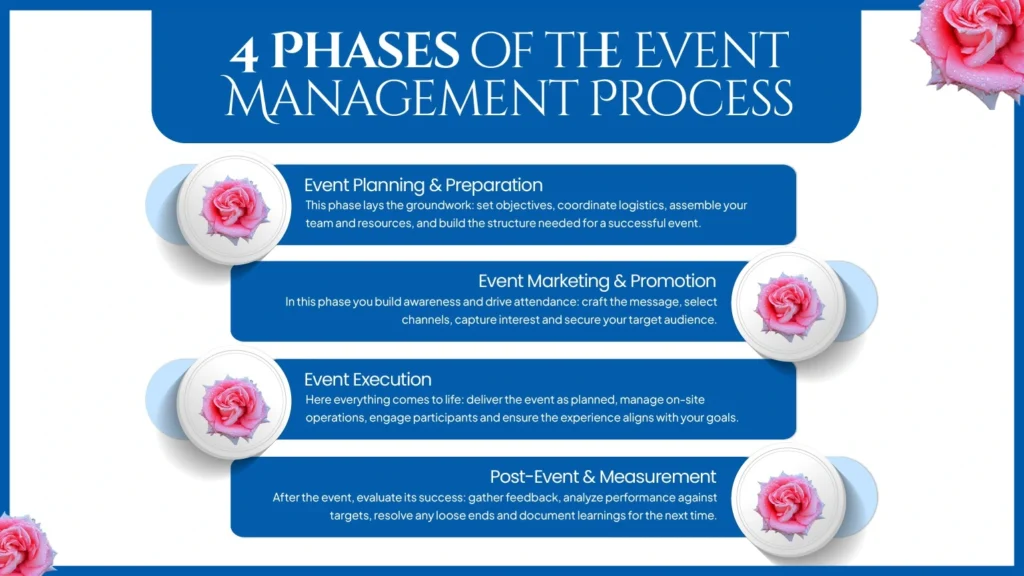
Four Phases of Event Management Process
Introduction
Overall, event management covers everything from initial planning to post-event follow ups. Here are the four phases:
Phase 1: Event Planning & Preparation
This phase lays the foundation for a successful event by defining objectives, understanding the audience, setting a budget, and securing the right venue and vendors.
Clear the Main Objective: The first step is to understand the main objectives of the event so that the event manager can create a strategic plan to meet expectations and deliver memorable experiences. It is also important to be clear about the type of event being managed.
Event managers handle all kinds of events but most common types include:
- Social Events: Birthdays, bridal showers, weddings, baby showers, and private parties
- Corporate Events: Product launches, service launches, team-building activities, company seminars, and conferences
- Cultural Events: Festivals and exhibitions
- Virtual Events: Webinars and online conferences
Define Audience: Every event is unique, and so is its audience. Understanding the audience’s mindset is crucial. For example, corporate employees behave differently during a seminar compared to families attending a wedding. Recognizing these differences and understanding audience expectations helps in planning and executing the event effectively.
Prepare Budget Plan: Mindful budgeting is essential for a successful event. Event managers are responsible for preparing and monitoring the budget to decide how much to allocate to each area and using cost-effective methods without compromising quality.
Venue Sourcing: Once the budget is set, select the venue accordingly. The venue is one of the most significant and often most expensive elements of an event. Consider these questions before finalizing a venue:
- What type of venue is best suited for the event (restaurant, sports stadium, hotel, golf course, etc.)?
- How many guests need to be accommodated?
- Is it necessary for the venue to have guest rooms?
Vendor Sourcing: An event is incomplete without caterers and creative services such as stage décor. Check available menus, compare costs, and taste the food personally. Always keep your allocated budget for catering, décor, and other vendor services in mind before finalizing any decisions.
Phase 2: Event Marketing & Promotion
Once the planning stage is complete, the next step is promoting the event. Effective promotion ensures that the right audience knows about the event and feels motivated to attend.
Choose the Best Marketing Strategy for Each Event Type: Although promotion methods may vary depending on the type of event, the ultimate goal remains the same which is to maximize awareness and encourage participation. Always choose the promotion method according to the type of event:
Event Type and Promotion Methods:
- Social Events (weddings, birthdays, private parties): Personal invitations, social media posts, and word-of-mouth
- Corporate Events (conferences, seminars, product launches): Email campaigns, press releases, LinkedIn promotions, and professional networks
- Cultural Events (festivals, exhibitions): Community outreach, posters, partnerships, and social media ads
- Virtual Events (webinars, online conferences): Targeted ads, registration pages, reminder emails, and digital marketing strategies
Ensure Presence of an Official Website or Registration Form: Whatever the event may be, make sure to have an official website or registration form. A professional landing page builds trust and makes registration easier for attendees.
Ensure Social Media Marketing: Create dedicated pages or campaigns on platforms like Facebook, Instagram, Pinterest, TikTok, and others. It is essential to ensure all social media channels share a consistent message and branding for the event.
Book Sponsors, Exhibitors, and Speakers: Engage sponsors, exhibitors, and speakers early to add value to your event. Such connections have a direct impact on increasing reach and strengthening credibility.
Phase 3: Event Execution & Onsite Management
After weeks of planning and coordination, the big day has finally arrived. This stage is where every detail comes to life. From vendors to speakers and guests, everyone plays an important role in creating a seamless experience.
Manage Logistics: Logistics are the backbone of successful event execution. Make sure that every detail listed below works in harmony to deliver a smooth and memorable experience for attendees:
- Venue Setup: Arrange seating, stage, decor, lighting, and sound systems to ensure everything is ready before guests arrive.
- Technical Arrangements: Test and operate all audio-visual equipment, including projectors, screens, microphones, and Wi-Fi, to avoid last-minute issues.
- Catering Coordination: Serve food and beverages on schedule and also accommodate dietary preferences and restrictions.
- Transportation and Parking: Provide clear parking arrangements and shuttle services to make guest arrivals and departures hassle-free.
- Signage and Directions: Place banners, digital boards, and directional signs throughout the venue to guide attendees about the venue.
- Onsite Staff Management: Ensure ushers, security personnel, volunteers, and technical teams are at their assigned stations and prepared to assist.
- Emergency Preparedness: Keep backup power, medical support, and contingency plans in place to handle unexpected challenges.
Webinar or Virtual Event Management: Managing a virtual or hybrid event requires a different approach than an in-person gathering. Event managers must ensure technology is reliable, user-friendly, and engaging for remote attendees.
Use of Event Management Software: With the advancement in technology, there are many event management software that are now available to streamline the process. These tools are designed to ensure your event is executed and managed effectively and efficiently. They automate many tasks such as ticketing, registration, scheduling, and simplify the complex tasks of event management. They also offer analytics and reporting to measure the success of the event.
Some popular examples of event management software include Accruent, Eventbrite, and Whova. Each offers multiple features to enhance planning and execution.
Ensure Attendee Engagement: It is the Event manager’s responsibility to keep attendees actively involved during the event. It increases satisfaction and ensures that they leave with a positive experience. Here are few tips to increase attendee engagement:
- Interactive Sessions: Add live Q&As, polls, or games to keep participants engaged.
- Gamification: Offer rewards, challenges, or contests to make participation fun.
- Live Feedback: Encourage attendees to share feedback during the event to adjust on the spot if needed.
Phase 4: Post-Event Analysis & Follow-Up
The event doesn’t end when the last guest leaves. Following up with attendees (if applicable), stakeholders, and vendors is essential for building long-term relationships.
Collect feedback from clients and vendors to measure success and identify areas for improvement. Event managers can also send short surveys to learn about their overall experience.
Never forget to send thank-you emails, share event highlights, and provide recordings or photos to keep the experience alive.
Essential Skills for Event Managers
Introduction
Event managers need a diverse set of skills to plan, organize, and execute events successfully. These skills include strategic planning, clear communication, problem-solving, and technological proficiency.
Planning Skills
Event managers should have the skills to create detailed plans to align every aspect of the event with its objectives. They anticipate challenges early and prepare practical solutions in advance.
Communication and Interpersonal Skills
Event managers should have the skills to clearly convey ideas to clients, vendors, and teams. They build strong relationships that keep collaboration effective.
Organizational Skills
Event managers should know about structuring tasks, timelines, and use resources to keep events on track. They maintain order even when managing multiple tasks or multiple events at the same time.
Multitasking Skills
Event managers should have the ability to juggle various responsibilities without losing focus on quality. They should also ensure that deadlines are met.
Problem-Solving Skills
Event managers must be trained to handle unexpected issues calmly. They should have the skills to turn potential obstacles into opportunities for smoother execution.
Negotiation Skills
Event managers must have the skills to secure the best deals with vendors and service providers in order to balance budgets while ensuring quality outcomes.
Technological Skills for Streamlined Event Planning
The ability to adapt to new technology is a must. Event managers must understand the significance of using digital tools for registration and scheduling to improve efficiency and guest experiences.
Conclusion
Event management is a systematic process that requires strategic planning, effective execution, and continuous evaluation. By understanding the four key phases: Planning & Preparation, Marketing & Promotion, Execution & Onsite Management, and Post-Event Analysis & Follow-Up, expert event managers can ensure that every detail is carefully managed to run an event successfully.
Frequently Asked Question